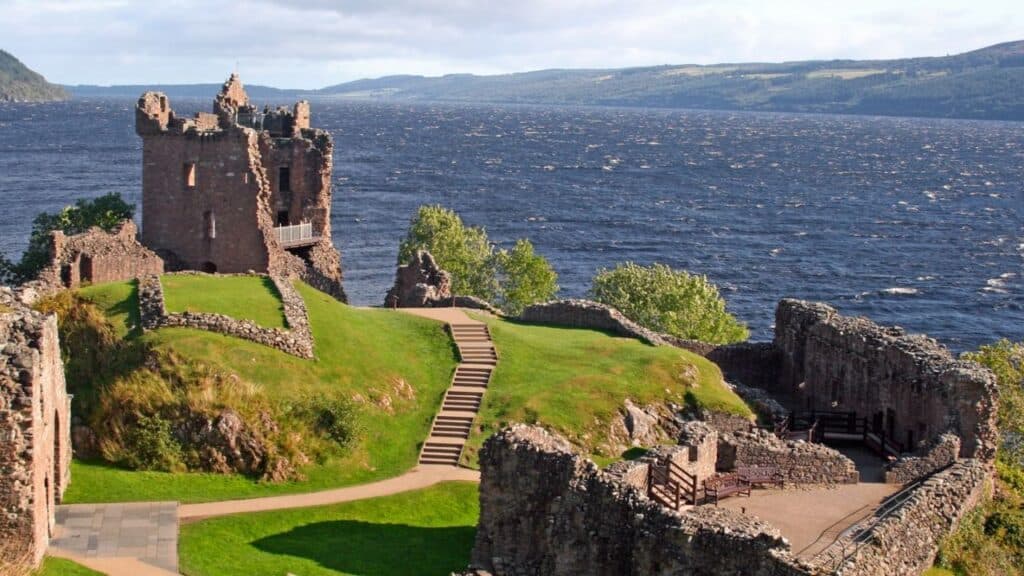
Most people come to Urquhart Castle for the big Loch Ness view, the broken towers, and that classic postcard shot. Fair enough, it’s gorgeous. But the parts that stay with you are often smaller, rougher, and easier to miss.
As of March 2026, there haven’t been major changes to the visit, so the same thing still happens every day: people rush to the headline views and breeze past the details that make the place feel real. Slow down for a few extra minutes, and the castle starts to make a lot more sense.
This article may contain affiliate links. If you purchase through these links, I may earn a small commission at no cost to you. Thank you for your support!
Look beyond the main ruins and you will notice the castle’s best hidden details
Big ruins can flatten history a bit. You see stone, sky, loch, click, done. Yet Urquhart gets more interesting when you look for the pieces that show how people lived, fought, and suffered here.
Why the replica trebuchet deserves more than a passing glance
The replica trebuchet sits right by the walkway, and loads of visitors treat it like scenery. They snap one quick photo, then move on. That’s a shame, because it explains the whole place in one glance.
Up close, the thing looks huge, almost absurdly huge. That’s the point. A castle can seem solid and untouchable until you imagine stones flying at its walls with that kind of force. Suddenly, the ruins stop feeling romantic and start feeling tense.
It also helps you picture siege warfare without needing a history lecture. You don’t have to know names, dates, or who attacked whom. You only need to stand there and think, “People built this to smash a fortress.” That lands fast.
If you want a better photo, step a little to the side and frame the trebuchet with the ruins behind it. The scale is much clearer from that angle.
The prison cell, thick walls, and other rough details most people rush by
Then there’s the prison cell, or dungeon pit, one of the grimmest little stops on the site. It’s small, dark, and easy to miss if you’re focused on the skyline. But it changes the mood in seconds.
This wasn’t a pretty shell built for tourists. It was cold, controlling, and often cruel. The prison cell makes that plain without saying a word.
Nearby, pay attention to the heavy loch-facing walls of the Great Hall area and the stonework around doorways and passages. Up close, the masonry feels blunt and practical. Nothing about it says comfort. Even on a bright day, you can sense how harsh life here could be.
If you only photograph the outline of the ruins, you miss the part that makes the castle feel human.
That’s the trick at Urquhart. The place gets better when you stop looking only at the shape of the castle and start noticing its texture.
The best viewpoints are not always the busiest ones
The most crowded photo stops aren’t always the best ones. Some of the strongest views come from places people either rush through or don’t fully use. That’s good news for you, because a calmer viewpoint often gives you a better visit and better pictures.
Climb Grant Tower for the view many visitors never fully use
Grant Tower is the one to commit to. Not halfway. Not “good enough.” Go all the way up.
The climb is narrow, and yes, it can bottleneck later in the day. Still, the payoff is worth it. From the top, the ruins spread out below you in a way that finally makes the site feel whole. You can see how the different parts connect, instead of reading them as random bits of stone.
Loch Ness opens out too, long and moody and slightly unreal, especially if the light keeps changing. On a clear day, the view stretches far enough to make the castle seem both powerful and exposed, which is a fascinating contrast.
From up there, smaller features also pop into view. The chapel area is easier to place. The dovecote becomes more than a passing detail. Even the thickness of the walls and the position of old windows start to stand out. Higher up, there’s also a strange quiet. The site noise drops away a bit, and the place feels older.
If you can, go early. The tight stairs are nicer before the crowds build.
Pause at the visitor center veranda before you even enter the castle
This is the easiest overlooked stop of the whole visit. Before you head down toward the ruins, step onto the visitor center veranda and stay there for a minute.
You get a broad, calm overview of the castle with Loch Ness behind it, and that simple pause helps with everything that comes after. The layout clicks. You can see the position of the ruins on the rocky peninsula. You also get a sense of why this location mattered so much.
Better still, the veranda is often less crowded than the classic viewpoints below. That makes it great for photos, especially if you want a wide shot without people drifting through the frame every ten seconds. If you’ve got a coffee in hand, even better… no shame there.
It’s also a smart stop if someone in your group wants the view without every set of stairs and slopes. Easy, quick, useful.
A few quick stops add context, calm, and better photos

You don’t need a longer visit to get more from Urquhart Castle. You only need a smarter one. A few short stops, each taking a minute or five, can add depth without making the day feel heavy.
Walk down to the loch shore by the water gate for a quieter Urquhart moment
The water gate area changes the feel of the castle at once. Down by the shore, you’re closer to the loch, the stone, and the original point of arrival. It feels less like a viewpoint and more like contact.
From here, the castle rises above you instead of sitting neatly in front of you. That lower angle is great for photos, because it shows the structure and the water together without the usual crowd-filled foreground. The waves, the rocks, the old gate, it all feels calmer.
More than anything, this short detour reminds you that Urquhart wasn’t built beside Loch Ness by accident. The loch was part of the castle’s life, access, and defense. You feel that best at water level.
Do not skip the small museum pieces on your way out
Back at the visitor center, the museum displays tie the visit together beautifully. The large castle model helps you picture the full structure, especially after walking through broken walls and roofless spaces. Suddenly, the site outside stops looking scattered.
Then there’s the Urquhart Ewer, a fine 15th-century bronze jug found at the castle. It’s a small object, but wow, it does a lot of work. One good artifact can pull a ruined place back into everyday life, and this one does exactly that.
If you’re short on time, give these exhibits ten minutes. That’s enough to connect the ruins you saw with the castle that once stood here.
The best parts of Urquhart Castle often aren’t the loudest ones. They’re the rough stones, the quiet tower top, the loch-side pause, and the little museum pieces that bring the whole place into focus.
So give the famous view its moment, sure. Then slow down, look closer, and spend an extra minute or two at the stops most people miss. That’s where the castle stops being a backdrop and starts feeling alive.